How a $2 Hairspray Can Cracked the World's Safest Vault in a Record Crime Story
Key takeaways
- In February 2003, thieves emptied more than 120 safe-deposit boxes at the Antwerp Diamond Center, with losses estimated above $100 million.
- The crew bypassed seismic sensors, magnetic alarms, light detectors and a lock with over 100 million possible combinations — with no signs of forced entry.
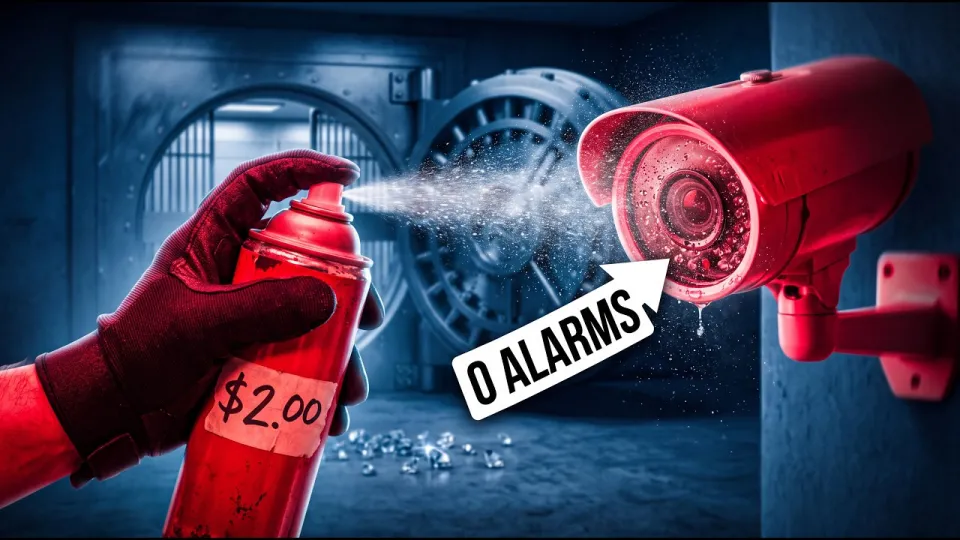
- A $2 can of hairspray was reportedly used to defeat a heat or motion sensor inside the vault area, part of a wider kit of low-tech tricks.
- The break-in was traced through a discarded trash bag found miles away, which led investigators to Leonardo Notarbartolo.
- Notarbartolo was convicted, but most of the diamonds and jewels were never recovered.
A crime story worth retelling begins with a contradiction: the world's safest vault was not blown open, drilled or stormed — it was walked into. In February 2003, a small crew emptied more than 120 safe-deposit boxes at the Antwerp Diamond Center in Belgium, taking jewels and stones valued at over $100 million, and left no sign of forced entry. The case became known as one of the most successful diamond thefts in history, and the detail that keeps it alive is almost absurd: a cheap can of hairspray is said to have played a role in beating the vault's sensors.
What made the Antwerp Diamond Center so hard to rob
The Antwerp Diamond Center sat at the heart of the global diamond trade, and its underground vault was built as a layered fortress. Anyone planning the crime story had to get past a sequence of defenses that were designed to catch each other's failures.
- Perimeter and building security: guards, cameras, and controlled access through the diamond district's private streets.
- Seismic sensors: detectors tuned to pick up vibrations from drilling, cutting or heavy impact.
- Magnetic field sensors: alarms triggered by changes in the magnetic environment around the vault door.
- Light and motion detection: sensors inside the vault area that reacted to infrared light and movement.
- A combination lock: a dial lock with a reported 100 million possible combinations, plus a separate key.
- Safe-deposit boxes: individual boxes inside the vault, each requiring its own key held by the renter.
The vault's reputation rested on the idea that no single weakness could take down the whole system. The thieves' advantage was that they did not need to break the system — they needed to understand it.
The low-tech toolkit behind the break-in
The methods attributed to the Antwerp crew are the reason the case is still studied: most of the tools were ordinary, cheap and legal to buy. According to the investigation and later accounts, the team used a mix of surveillance, chemistry and patience rather than explosives.
- Hairspray against a sensor. A can of hairspray, costing about $2, was reportedly sprayed to block or coat a sensor — a heat or motion detector — so it would not register activity. The idea was not to destroy the device but to blind it.
- Tape and foil. Adhesive tape and aluminum foil were used to cover light sensors and shield magnetic fields, mimicking the conditions the alarms expected to see.
- A hidden camera. A small camera was placed to watch the vault's security patterns and record when guards and sensors behaved as normal.
- Insider knowledge. The crew appeared to know the layout, the timing of patrols and the quirks of the alarm system — information that is hard to obtain from the outside.
- Patience over speed. The operation was prepared over months, with the actual entry completed quietly enough that the vault's own alarms stayed silent.
None of these tricks is exotic on its own. Combined, they turned a fortress into a room with a door.
How the crew got in without triggering the alarms
The break-in worked because the thieves treated security as a set of predictable behaviors rather than an unbreakable wall. The sequence, as reconstructed by investigators, followed a simple logic.
- Step 1: Learn the routine. The crew observed the Diamond Center's security staff and the vault's access patterns, identifying when the building was quiet and which alarms were active.
- Step 2: Neutralize the sensors. Tape, foil and the hairspray can dealt with light, magnetic and motion detection. The goal was to make the vault area look unchanged to the system.
- Step 3: Open the lock. With the combination and key access obtained through insider help, the vault door was opened without force.
- Step 4: Empty the boxes. The thieves opened safe-deposit boxes and removed diamonds, gold and jewelry, leaving the boxes behind.
- Step 5: Leave quietly. No drilling, no explosion, no shattered door — the kind of exit that lets a theft go unnoticed until someone opens a box and finds it empty.
The scale of the haul — more than 120 boxes, losses estimated above $100 million — made the silence of the alarms the most remarkable part of the crime story.
The trash bag that broke the case
What undid the Antwerp crew was not a high-tech forensic breakthrough but ordinary garbage. Investigators found a discarded trash bag, reportedly left in a wooded area miles from the Diamond Center, containing items linked to the preparation of the heist. The contents — including receipts, tools and materials connected to the surveillance of the vault — gave police a trail.
The trail led to Leonardo Notarbartolo, an Italian man who became the public face of the case. He was convicted in Belgium for his role in the theft, and other members of the crew were identified or pursued over the years. The investigation showed the operation had the fingerprints of organized crime: disciplined planning, insider contacts and a market ready to absorb the stones.
That contrast is the heart of the story. A team careful enough to defeat seismic and magnetic alarms was undone by a bag of rubbish it did not bother to destroy.
Why most of the diamonds were never found
Most of the stolen goods from the Antwerp Diamond Center were never recovered, and that fact shapes how the case is remembered. Diamonds are easy to move: they are small, hard to trace, and can be recut, mixed into legitimate parcels or sold through informal channels. Once the stones left the vault, the chain of evidence thinned quickly.
Recovery was also limited by the nature of the crime. The thieves did not take a single identifiable object but hundreds of small items from private boxes, many of which were poorly documented by their owners. Even when suspects were convicted, the physical evidence needed to tie specific stones back to specific boxes was often missing. The result is a case with a clear conviction and an incomplete ending — the definition of an unresolved true crime story.
What the Antwerp heist changed about vault security
The Antwerp Diamond Center theft became a case study for the security industry because it showed that sophisticated systems fail when their assumptions are exploited. Alarms are built to detect certain signals; cover the sensor, mimic the expected environment, and the alarm reports that everything is fine.
After the heist, the diamond trade and vault operators focused more on layered verification, tamper detection and the human element — the insider who knows the routine. The lesson is not that technology is useless, but that a system is only as strong as the weakest link in the people and procedures around it. That is why the hairspray can still gets mentioned: it is a $2 reminder that a clever human can beat an expensive machine.
The bottom line on this crime story
The Antwerp Diamond Center heist remains one of the most audacious thefts ever documented: over $100 million in jewels taken from a vault with no signs of forced entry, using tape, foil, patience and a cheap can of hairspray. Leonardo Notarbartolo and his crew were caught largely because of a discarded trash bag, yet most of the stolen diamonds were never recovered. The case endures as a true crime story about preparation, insider knowledge and the gap between a security system's design and its reality. For a full reconstruction of the methods and the investigation, see the breakdown by Max Crime, the channel behind this crime story analysis.
FAQ
Q: What was the hairspray used for in the Antwerp diamond heist?
A: According to accounts of the investigation, a can of hairspray was used to block or coat a sensor inside the vault area so it would not detect movement or heat. It was part of a low-tech kit that also included tape and foil to defeat light and magnetic alarms.
Q: How much was stolen from the Antwerp Diamond Center?
A: The crew emptied more than 120 safe-deposit boxes, and losses were estimated at over $100 million in diamonds, gold and jewelry. Most of those goods were never recovered.
Q: Who was caught and how?
A: Leonardo Notarbartolo was convicted in Belgium for his role in the theft. Investigators linked the crew to the crime partly through a discarded trash bag found miles from the vault, which contained items connected to the planning.
Q: Why is the Antwerp heist still called the world's safest vault robbery?
A: The vault was protected by seismic sensors, magnetic field detectors, light alarms and a lock with over 100 million combinations, yet it was opened without force. The contrast between that security and a $2 can of hairspray is why the case is still studied and retold.
Questions & answers
What was the hairspray used for in the Antwerp diamond heist?
According to accounts of the investigation, a can of hairspray was used to block or coat a sensor inside the vault area so it would not detect movement or heat. It was part of a low-tech kit that also included tape and foil to defeat light and magnetic alarms.
How much was stolen from the Antwerp Diamond Center?
The crew emptied more than 120 safe-deposit boxes, and losses were estimated at over $100 million in diamonds, gold and jewelry. Most of those goods were never recovered.
Who was caught and how?
Leonardo Notarbartolo was convicted in Belgium for his role in the theft. Investigators linked the crew to the crime partly through a discarded trash bag found miles from the vault, which contained items connected to the planning.
Why is the Antwerp heist still called the world's safest vault robbery?
The vault was protected by seismic sensors, magnetic field detectors, light alarms and a lock with over 100 million combinations, yet it was opened without force. The contrast between that security and a $2 can of hairspray is why the case is still studied and retold.
Source: How a $2 Can of Hairspray Robbed the World’s Safest Vault (crime story) · Markdown version