The crime story of Eddie Tipton shows how two words and a store camera exposed the lottery insider who rigged the draw
Key takeaways
- Eddie Tipton was information security director at the Multi-State Lottery Association, the body that runs games such as Hot Lotto for member state lotteries.
- A Hot Lotto ticket bought in Des Moines in December 2010 was worth $16.5 million, yet the prize sat unclaimed for nearly a year.
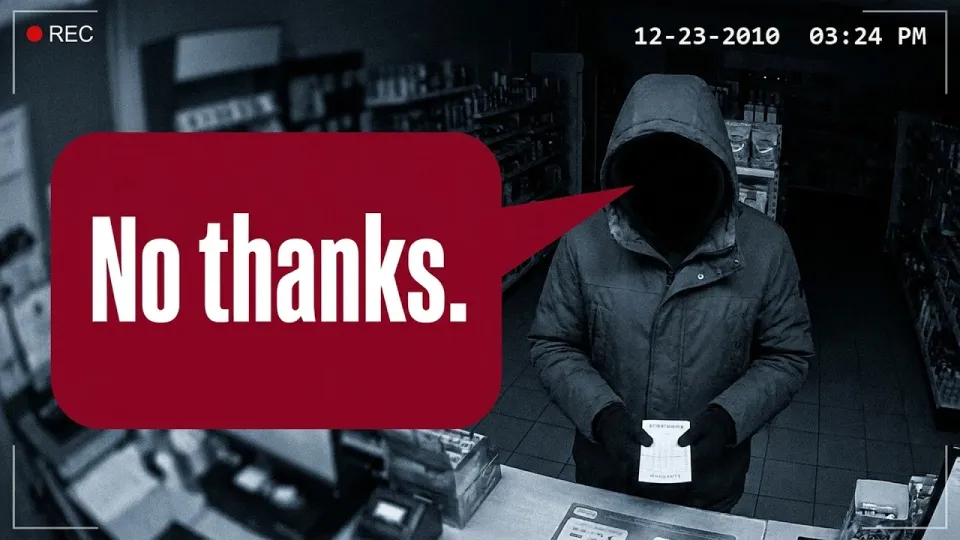
- Investigators released store surveillance video in 2014; coworkers recognized Tipton's voice and the way he moved, and the phrase "No thanks" helped place him at the counter.
- Tipton pleaded guilty in 2017 to tampering with the random number generators used to draw winning numbers; the $16.5 million claim was never paid.
- The rigged numbers came from computers kept offline, and the draw-room camera recorded roughly one second of footage for every minute.
The crime story of Eddie Tipton is the case of a lottery security chief who used his own access to rig drawings, then watched a $16.5 million Hot Lotto prize sit unclaimed for nearly a year because claiming it would have exposed him. Two ordinary words caught on a store camera — "No thanks" — and a coworker who recognized his voice helped investigators close the loop on the man who had written the code behind the winning numbers.
What the crime story of the rigged Hot Lotto ticket comes down to
Eddie Tipton worked as information security director at the Multi-State Lottery Association (MUSL), the nonprofit that supplies drawing equipment and random number generators to member state lotteries, including Hot Lotto. In that role he had legitimate access to the machines and code that produce winning numbers — and he was explicitly barred from playing the games he helped secure.
The scheme worked in stages:
- A rootkit or similar code modification was planted so that the random number generator would produce a predictable combination on a specific date.
- A ticket was bought for that draw by someone connected to Tipton, not by Tipton himself in most instances.
- The winning ticket was then routed through a lawyer and an anonymous trust so the real buyer would never appear on paper.
The Des Moines ticket from December 2010 was the version of this plan that fell apart. It was worth $16.5 million, and for almost a full year nobody came forward to claim it.
Why the $16.5 million prize went unclaimed for nearly a year
A legitimate winner of a jackpot that size calls the lottery the same week. This ticket generated silence, and that silence became the first real clue. When a claim finally arrived, it came through a lawyer acting for a trust, with just over an hour left before the deadline — a maneuver designed to keep the buyer's identity hidden.
The story offered on the phone did not match what the store's camera showed. A man had bought the ticket at a Des Moines convenience store, and the recording captured the transaction, including his reply of "No thanks" when the clerk asked whether he wanted to keep playing or take a receipt. That short exchange became one of the most recognizable details in the investigation.
Lottery rules generally allow trusts to claim prizes, but investigators can examine who actually bought the ticket. The mismatch between the caller's account and the video gave the Iowa Division of Criminal Investigation a reason to keep pulling the thread.
How investigators identified the man behind the numbers
In 2014 the Iowa DCI released the store surveillance footage publicly. Coworkers at MUSL saw it and recognized Tipton — not only his face but his voice and the way he moved. That recognition turned a puzzling claim into a named suspect.
The technical side of the case was equally specific. The random number generators that produced Hot Lotto numbers were kept on computers deliberately isolated from the internet, which meant any manipulation had to come from someone with physical or privileged access. Tipton had exactly that access, and he had written the program involved in producing the winning numbers.
Two details made the insider theory hard to dismiss:
- The draw room was monitored by a camera that captured only about one second of footage per minute, leaving wide gaps in any visual record.
- The winning combination was not random in the way the lottery's rules promised; it was predictable to someone who knew what had been done to the code.
The trial, the appeal and the deadline that nearly decided the case
Tipton was charged in Iowa, and the prosecution had to prove not just that he was the man in the video but that the drawing itself had been manipulated. The case moved through Polk County District Court and then to the Iowa Supreme Court in State v. Tipton, No. 15-1515.
The appeal turned on timing. Iowa law sets a deadline for bringing certain charges, and the defense argued that the case had been filed too late relative to when the alleged conduct occurred and when it was discovered. The Iowa Supreme Court's ruling addressed how that limitation period applied, and the outcome kept the prosecution alive rather than ending it.
That procedural fight matters in the wider picture: lottery fraud cases often hinge on records that are years old by the time anyone notices something is wrong, so the legal clock can be as decisive as the forensic evidence.
What Tipton admitted in his 2017 guilty plea
In 2017 Tipton pleaded guilty and admitted manipulating the code used to generate winning numbers. The admission confirmed what the technical evidence had suggested: the draws were not compromised by an outside hacker breaking in, but by an insider altering the software that was supposed to guarantee randomness.
The $16.5 million Hot Lotto prize from the Des Moines ticket was never paid on that claim. The trust arrangement, the lawyer's last-minute filing and the store recording all pointed in the same direction, and the money at the center of the scheme evaporated as evidence.
The case also exposed a structural weakness across state lotteries: the same small group of people who build and maintain drawing equipment also know exactly how it can be subverted, and oversight of those individuals depends heavily on rules they are trusted to follow. Related investigations in other states followed the same pattern of predictable draws and tickets bought by people close to the person with access.
Why this crime story still matters for lottery integrity
The Tipton case changed how lotteries think about insider risk. Security staff are now subject to stricter prohibitions on playing, closer scrutiny of who buys large winning tickets, and more attention to the physical and digital chain around random number generators.
It also shows how ordinary evidence outperforms elaborate schemes. A store camera, a clerk's question and a two-word answer did more to break the case than any single piece of forensic analysis — because the scheme depended on anonymity, and anonymity is exactly what a recording destroys.
Max Crime lays out the sequence in its video breakdown, from the unclaimed ticket to the released footage, the appeal over the legal deadline and the guilty plea, using court records and the surveillance video released by the Iowa DCI.
Summary
Eddie Tipton rigged lottery drawings from inside the organization trusted to keep them honest, and a $16.5 million Hot Lotto ticket bought in Des Moines became the loose thread. The prize sat unclaimed for nearly a year, the claim arrived through an anonymous trust at the last moment, and the story told to investigators did not fit the store recording. When that recording went public in 2014, coworkers recognized his voice and manner, and the case ended with a 2017 guilty plea admitting he had manipulated the code that generated winning numbers. Max Crime's breakdown follows the evidence in order and shows how two words — "No thanks" — helped undo a scheme built on hidden access.
Questions & answers
How did Eddie Tipton rig the lottery without being caught immediately?
He worked as information security director at the Multi-State Lottery Association, which gave him legitimate access to the random number generators used in draws. Code was modified so that a specific draw would produce a predictable combination, and the winning ticket was claimed through a lawyer and an anonymous trust rather than in the buyer's own name. That structure kept his name off the paperwork until investigators matched the store recording to him.
Why was the $16.5 million Hot Lotto prize never paid?
The ticket bought in Des Moines in December 2010 was tied to a rigged drawing. Investigators linked the claim to Tipton through surveillance footage and the trust arrangement, and the prize was not paid on that claim. Tipton later pleaded guilty in 2017 to manipulating the code used to generate winning numbers.
What role did the phrase "No thanks" play in the investigation?
The store camera recorded the man buying the ticket replying "No thanks" to the clerk, and that short exchange became a distinctive detail in the footage. When the Iowa DCI released the video in 2014, coworkers recognized both the voice and the way the man moved as Tipton's. The recording also contradicted the account given by the person who called in the claim.
What happened in the appeal over the legal deadline?
The defense argued that the charges came too late under Iowa's statute of limitations, and the issue reached the Iowa Supreme Court in State v. Tipton, No. 15-1515. The court's ruling addressed how the limitation period applied to conduct discovered years after the fact, and the prosecution was able to continue. Tipton ultimately pleaded guilty in 2017.
Source: He Rigged the Lottery. Two Words Gave Him Away. (crime story) · Markdown version